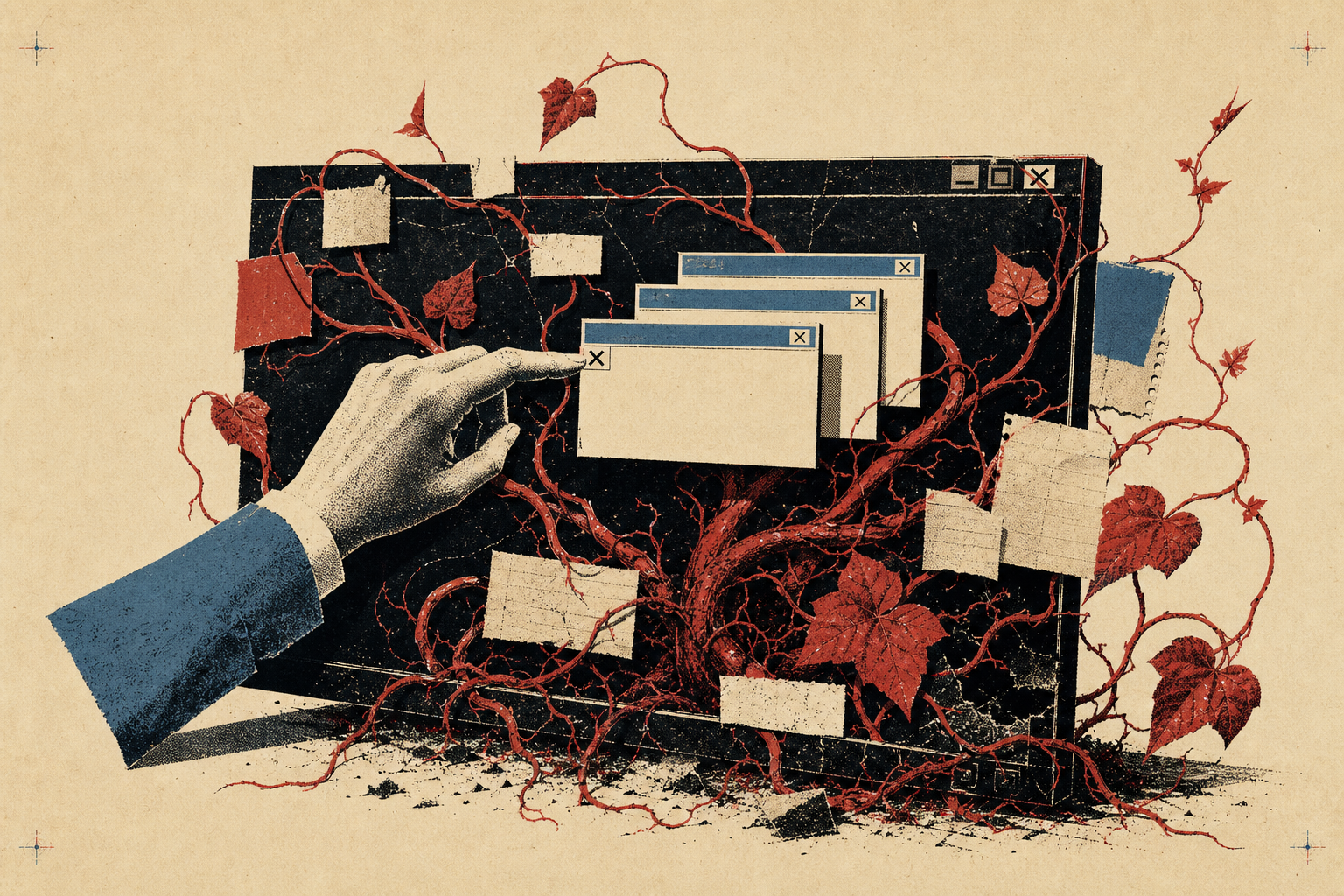
An assistant can be useful and still be an advertising surface. The danger is not only the ad—it is the ambiguity around whose problem the answer is solving.
Reporting in February 2026 described ChatGPT rolling out ads as AI companies looked for ways to pay for the cost of serving increasingly capable models. The move followed earlier experiments with app suggestions that users interpreted as unwanted commercial prompts.
Advertising does not automatically make a product bad. It does change the incentives. A search engine can rank a result for relevance; an assistant can also be pressured to keep the user engaged, recommend a partner or make a paid suggestion feel like neutral help.
The label has to survive the chat
In a feed, an ad can be boxed, labelled and skipped. In a conversation, the commercial message shares the same voice, layout and apparent intent as the answer. The product needs a visibly different treatment, a reason for the placement and a guarantee that ads cannot influence the model’s factual response.
Without that boundary, the assistant becomes a new form of native advertising: persuasive because it feels personal, trusted because it sounds helpful and difficult to audit because the exchange disappears into a chat history.
Trust is a product surface
The practical test is simple. Can a user tell when the system is answering, recommending or selling? Can they turn the commercial layer off without losing the core tool? Can an auditor inspect which incentives shaped the answer?
If the answer is no, the ad is not a small monetisation detail. It is a change to the relationship the product promised.
Sources & further reading
Sources establish the reported facts above. Analysis and conclusions are enshit.club’s own.