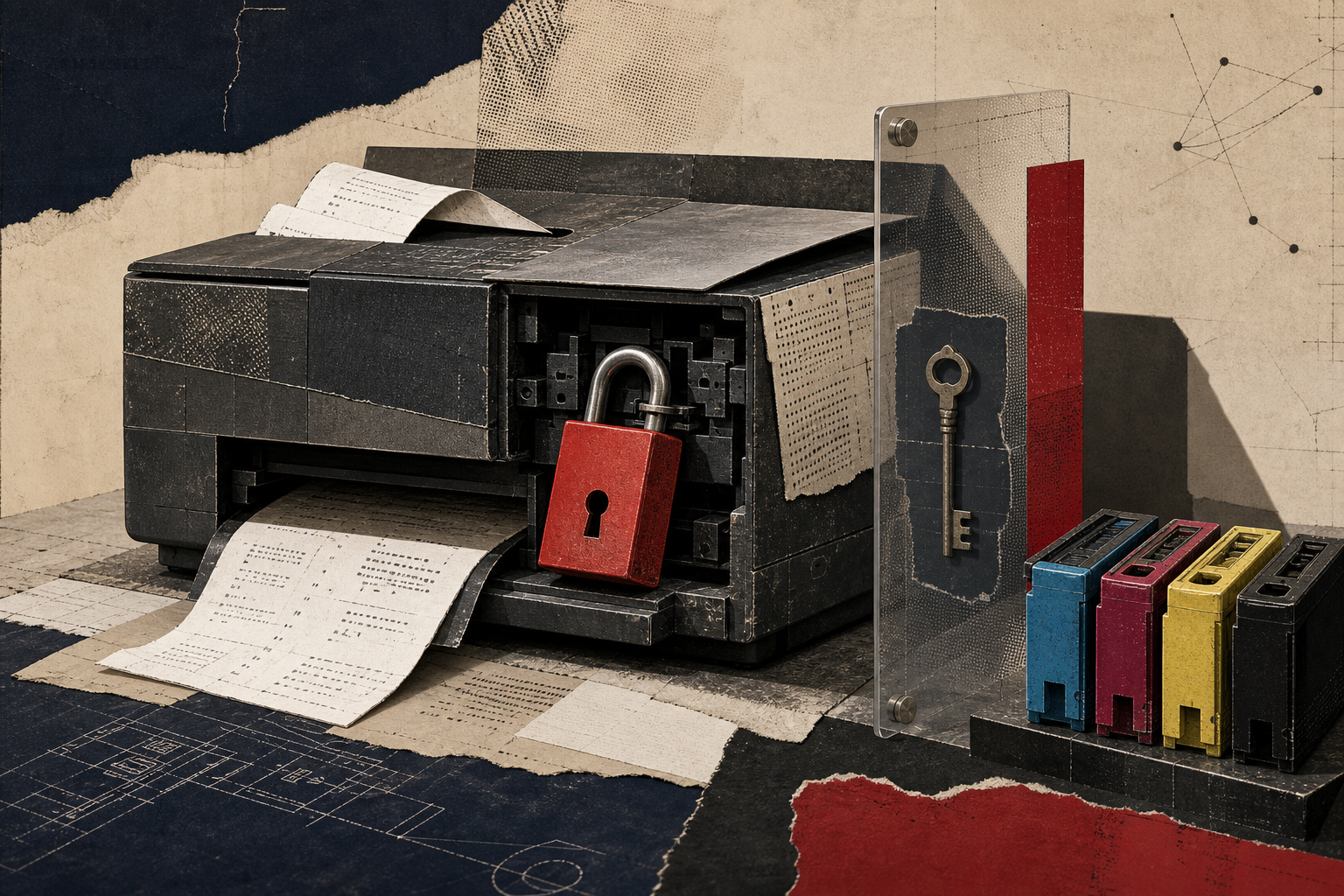
The modern printer can be physically present, full of ink and technically functional—and still refuse to print because a remote business rule says no.
HP’s own support documentation lists cancelled Instant Ink subscriptions among the reasons an enrolled printer may stop printing with subscription cartridges. The distinction is contractual: Instant Ink cartridges are tied to the service, even if ink remains inside them.
A separate fight concerns Dynamic Security, HP firmware that can reject cartridges without HP chips. A 2024 lawsuit accused the company of using updates to block lower-cost third-party ink. In March 2025, a judge approved a settlement in another cartridge-blocking case.
Ownership with a remote asterisk
The printer is a compact lesson in digital ownership. The customer buys durable hardware, but software determines which consumables count as legitimate and whether the machine may perform its basic function. The physical object is owned. Its behaviour is licensed.
Manufacturers describe these controls as quality and security measures. Customers experience them as a post-purchase change to the bargain—especially when a firmware update alters which cartridges work in a machine already sitting on their desk.
The right test
Ask one question: can the company make the thing materially less useful after purchase without touching it? If yes, the product needs stronger disclosure, offline fallbacks and a durable right to use compatible parts.
The right-to-repair movement has correctly expanded from screws and manuals to software locks. Repair is meaningless if a replaced part can be rejected by code. Ownership is meaningless if a cancelled service can strand usable material inside a machine.
The technical mechanism
Dynamic Security is a firmware-level compatibility check. The printer reads a cartridge chip; an update can change which identifiers or behaviours the firmware accepts before allowing a print job to proceed.
Instant Ink adds a separate entitlement layer. The cartridge may contain ink, but its use is tied to an active service relationship. The physical supply and the right to consume it are treated as different things.
That is why an offline printer can still become a remote policy problem: the software rule is stored on, or delivered to, the device that the owner already possesses.
Sources & further reading
- HP SupportCan’t print on an HP+ or Instant Ink enrolled printer↗
- Ars TechnicaHP sued again for blocking third-party ink↗
- iFixitSoftware locks and the right to repair↗
Sources establish the reported facts above. Analysis and conclusions are enshit.club’s own.