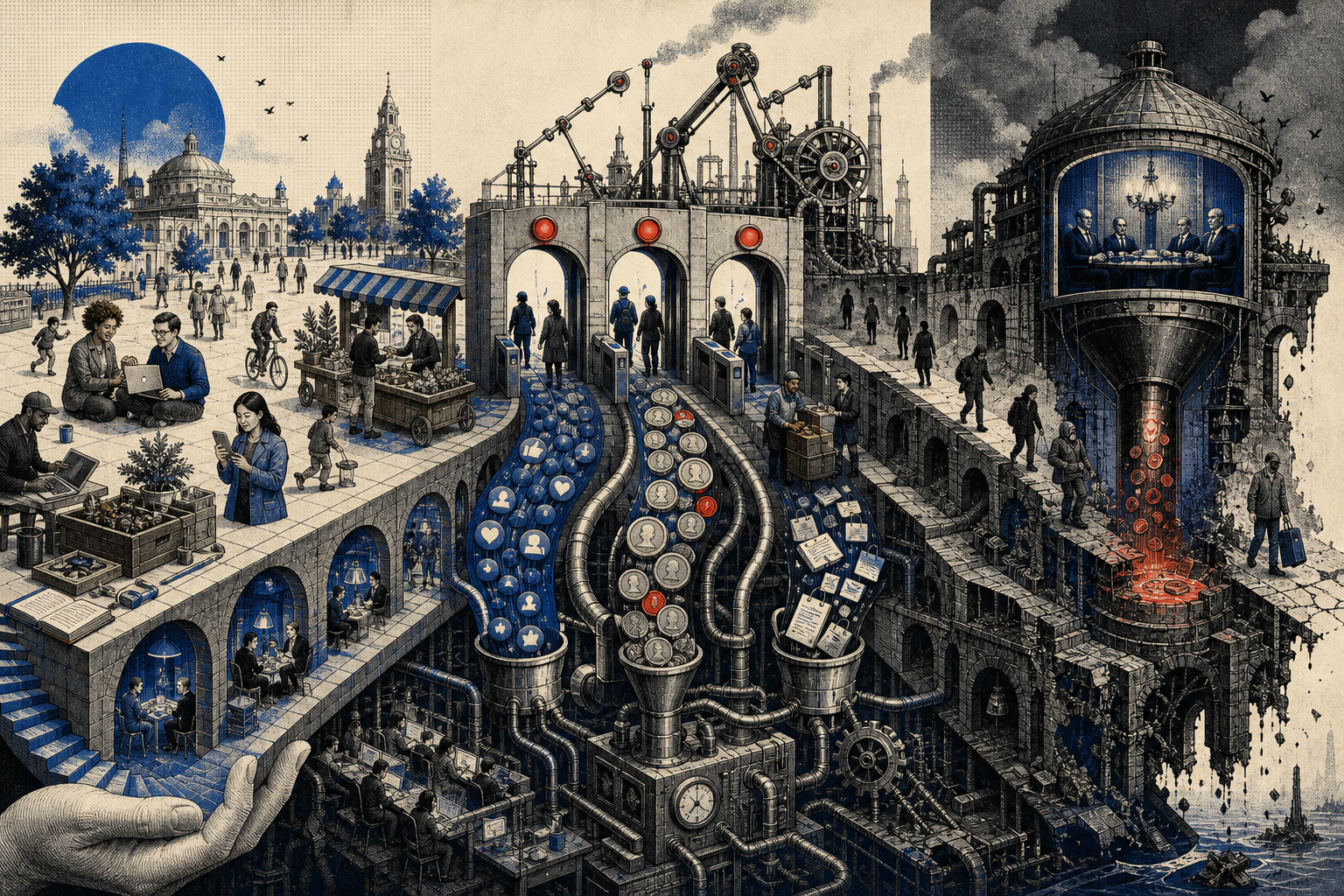
Things do not inevitably get worse. They get worse when the people controlling a platform can change the rules faster than everyone else can leave.
Cory Doctorow coined “enshittification” to describe a recognisable platform cycle. First, a service is generous to users to attract them. Next, it shifts value toward business customers to lock them in. Finally, once both sides depend on it, the platform claws value back for itself.
The term was selected as Macquarie Dictionary’s 2024 Word of the Year. Its definition focuses on gradual deterioration caused by reduced service quality, especially on online platforms, as a consequence of profit-seeking.
How do you spell enshittification?
The coined spelling is enshittification, with two consecutive t letters where “shit” meets “ification”. People also search for enshitification with one t. Both searches usually point to the same idea, but Doctorow’s original spelling and the dictionary form are enshittification.
The word is deliberately ugly because the process is ugly: a useful service becomes worse after dependence gives its owner room to extract more value. It is more specific than bad customer service or a disappointing update because it describes an incentive and power cycle.
Look for the switch
The useful unit of analysis is not whether a product feels annoying. It is who gains when the product changes. More ads, worse search, compulsory accounts, locked accessories and algorithmic feeds may look unrelated. Each can be a switch in how value is allocated.
Enshittification becomes possible when exit is expensive. Your friends are on the platform. Your files use its format. Your purchased media lives in its library. Your workplace standardised on its software. Dependence gives the intermediary room to squeeze.
It can be resisted
Interoperability lowers switching costs. Right-to-repair rules limit post-purchase control. Privacy law restrains surveillance-based extraction. Antitrust policy can prevent a platform from using dominance in one market to dictate another.
The practical response is to make exit real: portable data, open formats, replaceable parts, cancellable contracts and products that continue to work when a vendor loses interest. The opposite of enshittification is not nostalgia. It is leverage.
Sources & further reading
- Wired / Cory DoctorowThe ‘enshittification’ of TikTok↗
- Macquarie DictionaryMacquarie Word of the Year 2024↗
Sources establish the reported facts above. Analysis and conclusions are enshit.club’s own.